
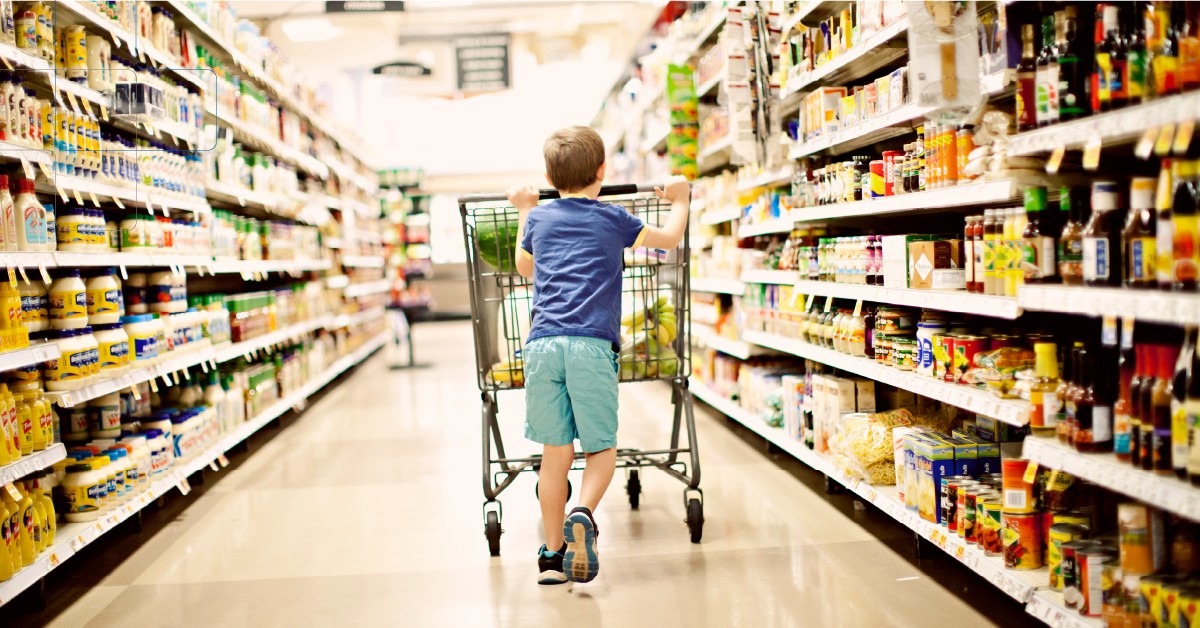
Food and beverage labelling has to combine speed and precision: the labelling machine must keep pace with high-speed lines, adapt to different container formats and place every label exactly where it belongs to keep production running. At Etima we see labelling as more than a compliance step: it is about continuity, brand protection and a more predictable line.
Why precision matters as much as speed
In a food or beverage plant, speed is everything. But speed only adds value when it comes with precision. A correctly placed label on every container is what allows the line to hold its pace, shift after shift, without stops that break the flow.
That is why, when we look at labelling from a wider perspective, we see much more than a final step. It is continuity, efficiency and traceability. A well-integrated labelling station helps the plant work better: it brings operational predictability and contributes to a higher OEE (Overall Equipment Effectiveness).
The questions every plant asks
When we talk to production managers in the sector, the same questions come up. Will the labeller sync with my line? Will it handle all my formats? Will it be easy to keep running? They are very specific questions, and each one has a technical answer.
Synchronisation with the line
The labelling machine has to fit into what already exists. By default we connect the machine to the client’s line through OPC UA, an open protocol that allows fast and transparent integration. When the plant works with other standards, we adapt to them. The principle is to adapt to the line the client already has, not to impose ours.
Every format on the same machine
Food production combines cans, glass jars and PET containers in different diameters and heights. The machine has to adapt to the container, not the other way round. On many of our solutions a format change takes a matter of minutes, so the line can switch between references while keeping a steady pace.
The right application technology for each container
There is no single technology that suits everything. Hot melt, which applies hot adhesive to a paper label, is the reference for canning and cans. Cold glue with pre-cut paper is common in high-volume beverages because of its low cost per container. Self-adhesive labelling is the most flexible and precise. The choice depends on the container surface, the line speed, the cost per container and the precision required.
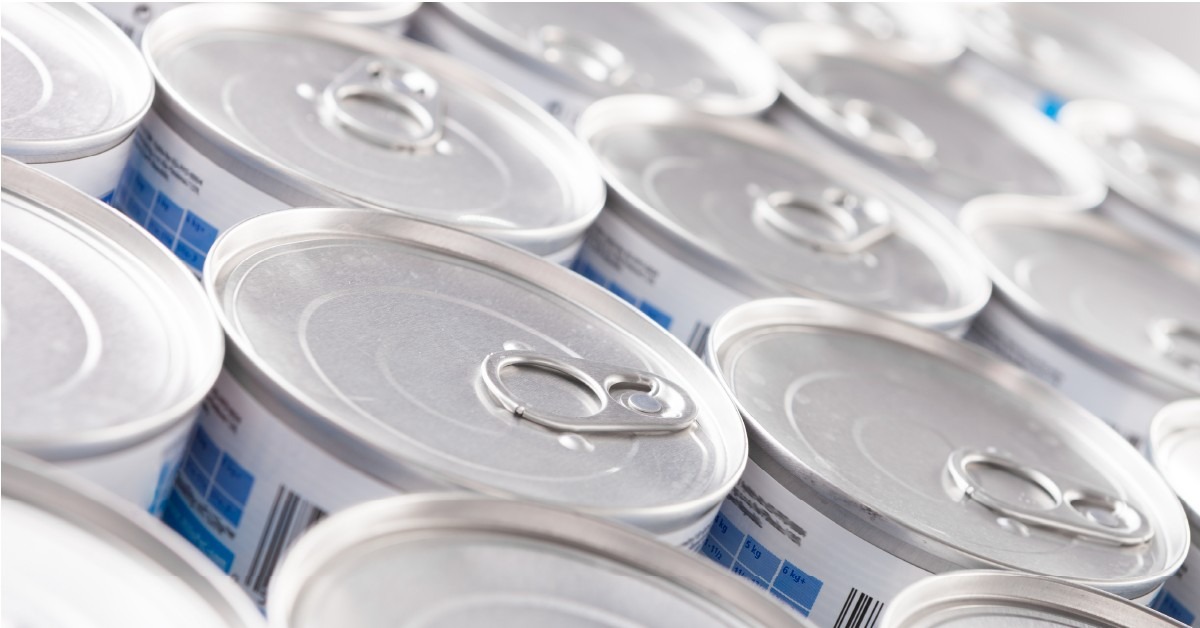
Etima CANFLEX: designed for the reality of food production
Etima CANFLEX was built to answer those questions. It is a compact, flexible and fast labelling machine for cylindrical containers that adapts to different can formats and fits easily into high-speed lines. Its spiral spray hot melt system applies the adhesive precisely and cleanly.
One of our clients in Greece, a canned peach producer, replaced two labelling machines with a single Etima CANFLEX. That change allowed them to unify two lines, automate the end of line and improve productivity.
In another recent project, integrating an Etima CANFLEX into a food line made it possible to start up without long stops, reduce micro-stops and improve OEE from day one. You can see its features on the Etima CANFLEX product page.
The values behind every solution
We have been designing labelling stations for more than forty years, with our production site in Castellar del Vallès (Barcelona), and we work with an open mind, listening to the client and adapting to every challenge. Every line is different, so every solution has to be different too. Three values sum it up:
Adaptability. Customised solutions, tuned to the pace and format of each plant.
Transversal R&D. Innovation applied from mechanical design to digital connectivity. We do not just build machines: we build solutions that grow with the client’s plant.
Service as a strategic partner. We support the client throughout the whole cycle, from installation to continuous improvement.
We call it Efficient Evolution: improving a line’s performance without having to reinvent it. Integrating into what already exists, adapting the machine to the container and supporting the equipment throughout its service life. If you want to add a labelling machine without rebuilding the line, we explain how in our article on drop-in labelling machine integration.
Frequently asked questions about food and beverage labelling
Which labelling technology is best for cans?
Hot melt, which applies hot adhesive to a paper label, is the reference for canning and cans. The final choice depends on the container, the line speed and the requirements of each line.
Can cans, glass and PET be labelled on the same machine?
Yes. Etima CANFLEX works with rigid cylindrical containers in tinplate, glass and PET, with fast format changes.
How is the labelling machine integrated into an existing line?
By default through OPC UA, an open protocol. If the plant uses a different standard, the machine adapts to it.
When is a linear labelling machine the right choice, and when a rotary one?
Linear machines are very versatile for working with different formats and frequent changes. Rotary machines are designed for high outputs and continuous high-speed processes.
If you are planning a food or beverage labelling project, contact our team and tell us about your line.