Machines for vials
We offer the right solutions for this type of packaging in the pharmaceutical sector. Check out some of the features of the labelling machine(s) in question and contact us for more information. Remember that if your project requires very particular specifications, we can provide advice and offer you a fully bespoke alternative.


Frequently asked questions
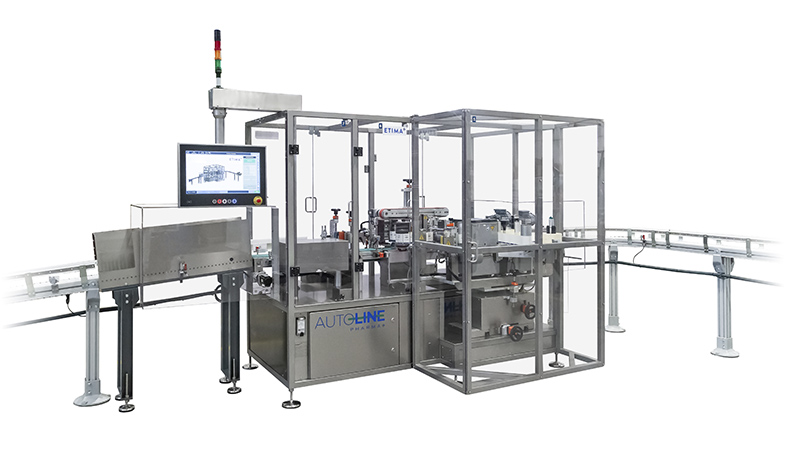
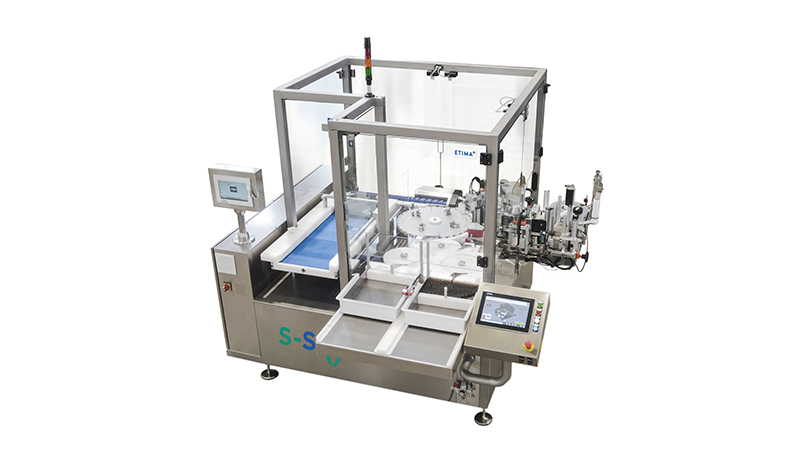
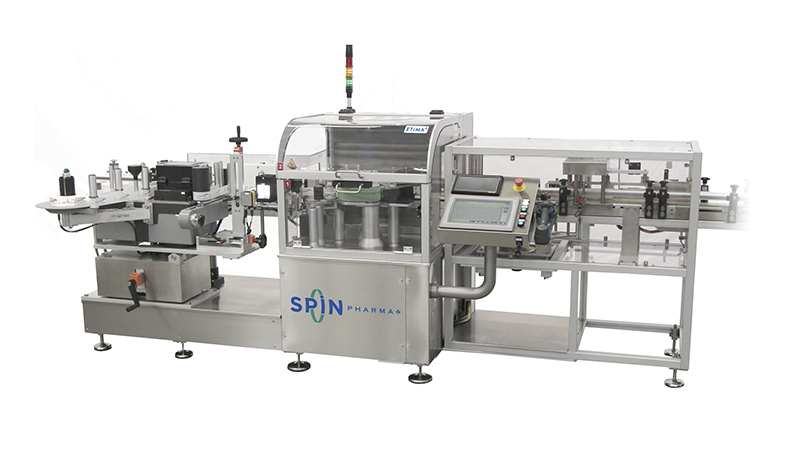
Five models: ETIFLEX Pharma, AUTOLINE Pharma, ROLLER Pharma, SPIN Pharma and S-SPIN Pharma.
Which one fits best is not decided by the container alone but by the whole picture: target production rate, space available on the line, working method, number of labels per unit and the required level of inspection and documentation. For small vials, the reference is S-SPIN Pharma. ETIFLEX Pharma, which is a rotary machine, suits vials of a certain size, for example over 40 mm; it is rare to see a rotary machine labelling small vials.
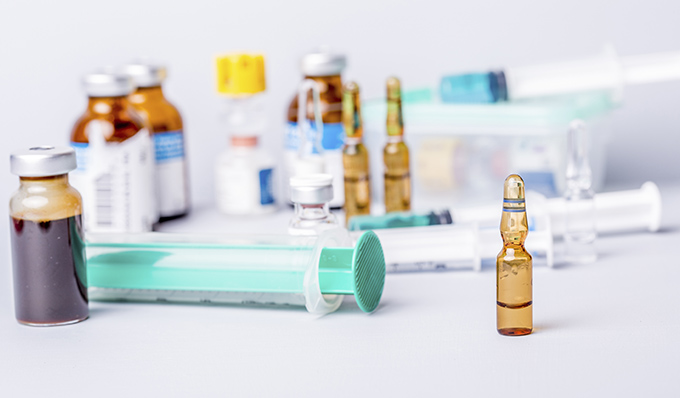
A small-volume cylindrical container, almost always made of type I glass, closed with an elastomeric stopper and an aluminium cap, intended for injectable medicines. Common formats range from 2 to 500 ml.
Its diameter and height determine how much label area there is and how the machine is set up. In practice, the ratio between the two matters more than the nominal volume.
The label is applied as a wrap-around on the body, which is the only area with a regular geometry. With a lyophilised vial more care is needed: no vibrations or knocks that could disturb the cake, and in many cases it is advisable to leave a clear strip so the contents can be inspected afterwards.
That window is not optional when visual inspection is part of the process, and it determines both the label design and the overlap accuracy that must be guaranteed.
Glass is rigid and does not move, so label position is repeatable without effort. Plastic gives: it accepts less holding pressure and can deform slightly while rotating. The adjustment is mainly in roller pressure and application speed.
Yes. The usual approach combines variable data printing, reading of the freshly printed code, grading of its quality and automatic rejection if anything does not match. That flow is what underpins the unit reconciliation required by Commission Delegated Regulation (EU) 2016/161.
Would you like to get in touch?
We design solutions tailored to the needs and characteristics of each customer. We adapt our approach to the project’s requirements.